
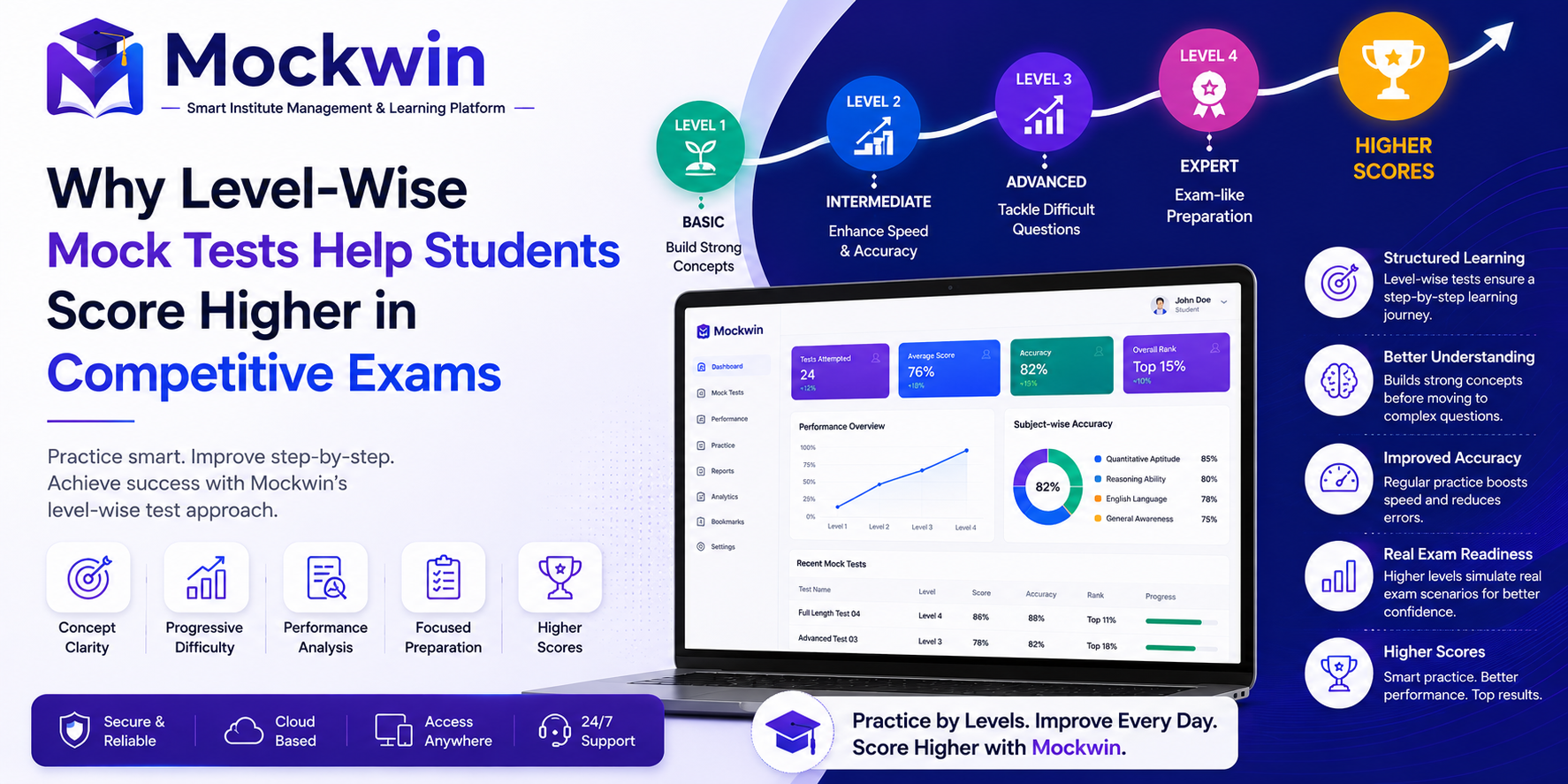
Students preparing for JEE, NEET, banking, or state-level competitive exams often measure progress by one number: their latest mock test score. But a single percentage on a full paper hides the real story. Did they struggle with fundamentals or only with time management? Were mistakes careless or conceptual? Mocwin’s level-wise testing approach answers those questions clearly.
Start with foundations, not panic
Throwing a three-hour full syllabus paper at a beginner creates anxiety, not learning. Level-wise mocks begin with focused sets—chapter basics, standard application problems, and mixed revision blocks—before students attempt exam-length simulations. Each level has a defined goal: concept clarity, speed under pressure, or full-paper stamina.
Faculty can assign the next level only when a student demonstrates readiness. That gatekeeping prevents the common trap of repeated full mocks that reinforce the same weak areas without fixing them. Progress becomes visible level by level, which motivates students who previously felt stuck below a score ceiling.
Instant feedback beats waiting a week
Traditional test cycles—conduct paper on Sunday, collect sheets Monday, discuss errors Friday—lose the moment when students are most receptive to correction. Online mocks inside Mocwin deliver results immediately: correct answers, explanations, time spent per question, and topic-wise breakdowns.
Students can review the same day while the problem-solving approach is still fresh. Teachers spend class time on patterns and strategy instead of manual checking. Parents see transparent progress reports rather than a single mark scribbled on a report card.
Identify weak topics early
Competitive exams reward consistency across subjects. A student strong in physics but weak in organic chemistry may still miss the cutoff. Level-wise analytics highlight which chapters drag scores down across multiple attempts. Counselors and mentors can schedule remedial sessions before gaps become habits.
Batch-level dashboards help institute heads compare sections, spot curriculum bottlenecks, and adjust teaching plans mid-season. Instead of discovering weak areas one week before the exam, teams intervene months earlier when improvement is still realistic.
Build exam-day stamina gradually
Full-length mocks still matter—but as the capstone, not the starting point. After students clear foundational and intermediate levels, timed full papers simulate real exam conditions: OMR-style navigation, section switching rules, and strict time limits. Repeated exposure reduces panic and improves question selection strategy.
Students learn when to skip, when to commit, and how to recover after a difficult section. These skills rarely develop from untimed homework alone. Structured mock progression trains both knowledge and temperament.
Certificates and milestones keep momentum
Long preparation cycles exhaust even dedicated learners. Mocwin ties level completion to visible milestones—certificates, batch rankings, and faculty recognition—that celebrate incremental wins. Small acknowledgments maintain engagement through the months when improvement feels slow.
Institutes using this model report higher attendance in test series batches and fewer mid-course dropouts. Students stay because they see a path, not just a distant exam date.
Practical rollout for your batch
Start with a diagnostic level to map starting points, publish a clear syllabus for each upcoming level, and hold a weekly review class dedicated to mock analysis. Keep full-length papers for the final preparation phase. Mocwin supports this cadence with assignable tests, automated grading, and progress views counselors can share during parent meetings.
Mock tests should guide preparation—not merely measure it. A level-wise system turns every attempt into a lesson, builds confidence through earned progress, and gives institutes a defensible, data-backed story about how they prepare students for success on exam day.
Visit the Mocwin blog and programs pages to see sample test series structures and speak with our team about rolling out level-wise mocks for your next batch.